Realistic Credit Card Mockup
In the landscape of digital design and marketing, the presentation of a concept is often as critical as the concept itself. A credit card design might be visually stunning in isolation, but its true value is realized when it is contextualized within a realistic environment. This is where a Realistic Credit Card Mockup becomes an indispensable asset. It serves not merely as a decorative frame, but as a functional tool that bridges the gap between abstract graphic files and tangible, client-ready presentations. For professionals ranging from freelance designers to small business owners, understanding how to integrate high-fidelity mockups into their workflow can significantly elevate the perceived quality of their work.
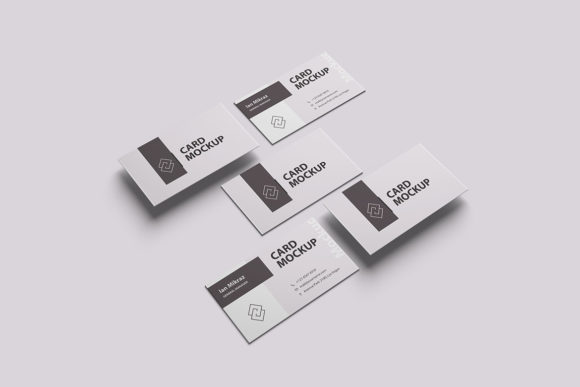
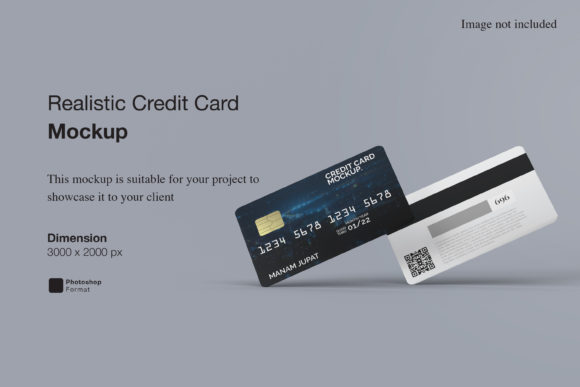
The primary function of this specific mockup is to provide a professional 3D display for your designs. By utilizing a PSD Photoshop format equipped with smart-object features, users can replace the current designs with their own within seconds. This efficiency is crucial in fast-paced environments where time is a scarce resource. Instead of manually compositing shadows, reflections, and perspective adjustments, which can introduce errors and inconsistencies, designers can focus on the creative aspects of the card layout while the mockup handles the technical rendering.
Integration into the Design Workflow
To understand the utility of a Realistic Credit Card Mockup, one must look at where it fits within the broader creative process. The workflow typically begins with ideation, moves into drafting, and culminates in presentation. During the drafting phase, designers often work on flat vectors or raster images. While these are necessary for precision, they lack depth. They do not convey how the material will feel, how light interacts with the surface, or how the card sits in a hand or on a desk.
This is where the mockup intervenes. It acts as a translation layer. When you import your flat design into the smart object layer of the PSD file, the software automatically maps your image onto the 3D geometry of the card. This process ensures that perspective distortions, lighting conditions, and texture overlays are applied consistently. For educators and bloggers who need to illustrate financial concepts or product reviews, this realism helps the audience visualize the end product more accurately than a simple screenshot ever could.
Preparation and Compatibility
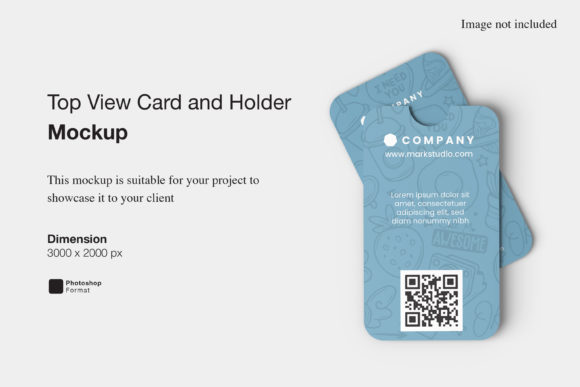
Before diving into the creation process, it is essential to prepare your assets correctly. The mockup is provided in a 3000x2000 px size at 300 dpi, which is the industry standard for high-quality print and sharp screen displays. However, compatibility starts before the file is even opened. Ensure that your source design matches the aspect ratio of the card template. Most standard credit cards follow a specific proportion (typically ISO/IEC 7810 ID-1), so designing your artwork to fit these dimensions prevents awkward stretching or cropping when placed inside the smart object.
Furthermore, consider the color profile. Working in RGB is generally recommended for digital presentations, ensuring that the colors appear vibrant on screens. If the final output is intended for physical printing, you may need to convert your smart object content to CMYK, though most modern mockups handle this conversion gracefully or allow for separate layers dedicated to print-ready outputs. Always keep a backup of your original design file separate from the mockup file to maintain version control and prevent accidental overwrites.
Practical Implementation and Efficiency
The core feature of this tool is the smart-object functionality. To use it effectively, open the PSD file in Adobe Photoshop. You will see a layer structure that includes the base card, shadow layers, reflection layers, and importantly, the "Smart Object" layer containing the placeholder design. Double-clicking this thumbnail opens a new window displaying your flat design. Here, you paste or place your artwork, save the changes (Ctrl+S or Cmd+S), and return to the main document. The mockup updates instantly.
This mechanism allows for rapid iteration. If a client requests a color change or a logo adjustment, you do not need to reconstruct the entire scene. You simply update the smart object, and the realistic lighting and shadows remain intact. This consistency is vital for maintaining brand integrity across multiple variations. For marketers running A/B tests on landing pages, being able to generate multiple versions of a credit card design quickly allows for faster decision-making based on user engagement metrics.
- Changeable Background: The mockup supports changing background colors. This is useful for isolating the card against different environments or matching the background to a brand’s color palette.
- High Resolution: At 300 dpi, the output is suitable for both web use and large-format printing, such as posters or brochures.
- User-Friendly Interface: The inclusion of a PDF help guide ensures that even users with intermediate Photoshop skills can navigate the file structure without frustration.
Contextual Use Cases
The versatility of a Realistic Credit Card Mockup extends beyond just showcasing a finished design. It plays a role in various stages of business and creative operations.
Client Presentations and Sales
When pitching a rebranding project or a new payment solution, visuals are persuasive. A flat vector file looks like a draft; a realistic mockup looks like a product. This psychological shift can increase conversion rates in sales meetings. Entrepreneurs and small business owners can use these visuals to demonstrate how their fintech app or loyalty program will look in the real world, helping stakeholders grasp the tangible benefits of the investment.
Social Media and Content Marketing
For influencers, bloggers, and social media managers, visual appeal drives engagement. A high-quality image of a sleek credit card mockup performs better than a generic icon. These assets can be used in tutorials explaining financial literacy, reviews of banking apps, or promotional posts for affiliate marketing campaigns. The ability to easily swap designs means content creators can produce fresh, relevant material regularly without needing to shoot physical props every time.
Internal Quality Control
Design teams can use mockups for internal reviews. Before sending a file to print or development, placing the design in a realistic context allows team members to spot errors that might be invisible on a plain background. Misaligned text, poor contrast, or awkward spacing becomes apparent when viewed through the lens of realism. This step serves as a final quality control checkpoint, reducing the risk of costly mistakes in production.
Long-Term Value and Organization
Investing in a high-quality mockup library is a long-term strategy for productivity. Over time, as you accumulate various mockups for different products—business cards, packaging, app interfaces—you create a personal repository of assets. Organizing these files efficiently is key. Create folders labeled by category (e.g., "Financial," "Apparel," "Tech") and subfolders for resolution or style. This organization reduces search time and keeps your workflow smooth.
It is also important to note that the photos used in previews are for illustration purposes only. This distinction reminds users that the power lies in their own input. The mockup is a canvas, not a final statement. The quality of the output depends entirely on the quality of the design placed within it. Therefore, pairing this tool with strong foundational design principles yields the best results.
Conclusion on Integration
A Realistic Credit Card Mockup is more than a static image; it is a dynamic component of a modern design workflow. By leveraging smart objects, high-resolution assets, and flexible backgrounds, professionals can streamline their presentation process, enhance client communication, and maintain consistency across projects. Whether you are a freelancer seeking to polish your portfolio, a marketer aiming to boost engagement, or an educator illustrating complex topics, integrating this tool into your routine offers a practical, efficient, and visually compelling solution. The key to success lies in treating the mockup not as an afterthought, but as an integral part of the design execution phase.